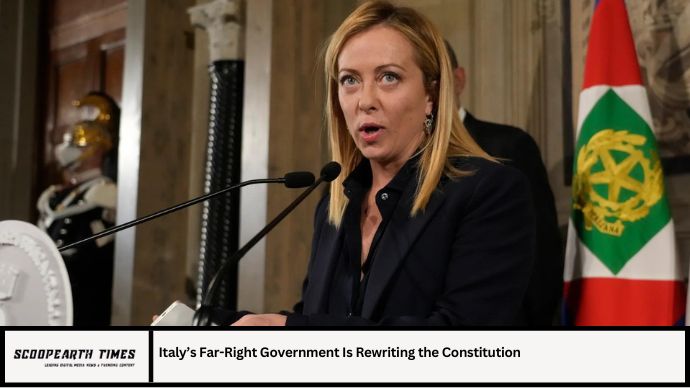
Italy’s political landscape has experienced a significant shift with the rise of its far-right government, spearheaded by figures from the Brothers of Italy (Fratelli d’Italia) party. This development has stirred considerable debate both domestically and internationally. The far-right government’s ambitious plans include rewriting the Italian Constitution, a move that could fundamentally alter the country’s democratic framework and socio-political dynamics.
In this detailed analysis, we will explore the motivations behind this constitutional overhaul, the proposed changes, and their potential implications for Italy’s political system and its citizens. We will also address frequently asked questions to provide a comprehensive understanding of this significant political shift.
Historical Context of Italy’s Constitution
Italy’s current Constitution was adopted on January 1, 1948, following the end of World War II and the fall of Fascism. Crafted during a period of reconstruction and democratic renewal, it embodies principles of democracy, civil rights, and social justice. The Constitution was designed to prevent a return to authoritarian rule and ensure a balance of power among the branches of government.
Since its inception, the Italian Constitution has undergone several amendments, reflecting changes in Italian society and politics. However, the core principles of democracy and republicanism have remained intact. The far-right government’s push for substantial revisions marks a departure from this tradition, raising concerns about the future trajectory of Italy’s democratic institutions.
The Rise of Italy’s Far-Right Government
The Brothers of Italy, led by Giorgia Meloni, emerged as a powerful political force in Italy’s 2022 general elections. Their platform has resonated with voters who are dissatisfied with traditional parties and eager for change. Meloni’s government has capitalized on this sentiment, positioning itself as a defender of Italian identity and sovereignty.
The far-right agenda has included a range of policy proposals, but the most significant and controversial is the plan to rewrite the Constitution. This initiative is driven by the government’s desire to implement their ideological vision, which contrasts sharply with the values enshrined in the current Constitution.
Key Proposed Changes to the Constitution
The proposed constitutional changes by Italy’s far-right government encompass several areas:
- Decentralization of Power: One of the major proposals is to increase the power of regional governments. The far-right government argues that decentralization would lead to more effective local governance and better reflect regional identities. Critics, however, worry that this could exacerbate regional disparities and weaken national cohesion.
- Revisions to the Electoral System: The government has suggested changes to the electoral system, including modifications to the proportional representation system. They argue that these changes will make the political system more efficient and less fragmented. However, opponents fear that such revisions could entrench the dominance of the far-right and undermine democratic pluralism.
- Judicial Reforms: Proposed changes to the judiciary include altering the appointment process for judges and increasing executive control over the judiciary. Proponents believe this will enhance judicial efficiency, while critics argue it poses a threat to judicial independence and could lead to politicization of the courts.
- Restrictions on Civil Liberties: The government has proposed tightening regulations on civil liberties, particularly concerning freedom of speech and assembly. They argue that these measures are necessary to combat extremism and maintain public order. Critics, however, see this as an attempt to stifle dissent and limit democratic freedoms.
- Changes to Social Policies: There are also proposals to overhaul social policies, including welfare and immigration. The government’s platform emphasizes stricter immigration controls and reductions in social welfare programs. These changes are controversial and have sparked widespread debate about their impact on social cohesion and human rights.
Implications of the Constitutional Changes
The proposed revisions to Italy’s Constitution carry profound implications for the country’s political and social landscape:
- Impact on Democracy: Fundamental changes to the Constitution could alter the balance of power between the executive, legislative, and judicial branches. This might erode democratic checks and balances and concentrate power within the far-right government.
- Regional Disparities: Increased regional autonomy could lead to greater regional disparities in economic development and public services. This may further divide the country along regional lines and challenge national unity.
- Judicial Independence: Reforms to the judiciary could undermine the independence of the courts, affecting the impartiality of legal proceedings and the protection of civil rights. This raises concerns about the potential for judicial overreach and abuse of power.
- Civil Liberties: Restrictions on civil liberties could stifle political dissent and freedom of expression. This poses a threat to democratic engagement and may lead to increased repression of opposition voices and civil society organizations.
- Social and Economic Effects: Changes to social policies, including welfare and immigration, could have significant social and economic consequences. These policies may impact vulnerable populations and affect Italy’s social fabric, potentially leading to increased inequality and social unrest.
The Response from Italian Society and International Community
The proposed constitutional changes have elicited a range of responses:
- Domestic Reactions: In Italy, the response has been polarized. Supporters of the far-right government view the changes as necessary reforms to address longstanding issues and modernize the country. Conversely, opponents, including civil society organizations, opposition parties, and legal experts, have expressed strong concerns about the potential erosion of democratic principles and civil rights.Public protests and debates have erupted across the country, highlighting the contentious nature of the proposed changes. Many Italians fear that these reforms could jeopardize the democratic gains achieved in the post-war era.
- International Reactions: The international community has also taken note of the developments in Italy. European Union institutions, human rights organizations, and foreign governments have voiced concerns about the potential implications for democratic governance and human rights.The EU, in particular, has expressed apprehension about the impact on the rule of law and democratic standards in Italy. There have been calls for dialogue and caution, emphasizing the importance of upholding democratic norms and principles.
Frequently Asked Questions (FAQ)
1. What motivated the far-right government to propose constitutional changes?
The far-right government, led by Giorgia Meloni and the Brothers of Italy, aims to implement their ideological vision, which includes greater regional autonomy, judicial reforms, and stricter social policies. They argue that these changes are necessary to address inefficiencies and safeguard national interests.
2. How will the proposed changes affect the balance of power in Italy?
The proposed changes could significantly alter the balance of power between the executive, legislative, and judicial branches. Increased regional autonomy and alterations to the judicial appointment process may concentrate power within the executive branch and undermine democratic checks and balances.
3. What are the potential risks to civil liberties and human rights?
The proposed restrictions on civil liberties, including freedom of speech and assembly, pose risks to democratic engagement and the protection of human rights. Critics argue that these measures could stifle dissent and limit political freedoms, leading to increased repression of opposition voices.
4. How have domestic and international communities reacted to the proposed changes?
Domestic reactions have been polarized, with supporters of the far-right government backing the changes as necessary reforms, while opponents express concerns about the erosion of democratic principles. Internationally, there are apprehensions about the impact on democratic governance and human rights, with calls for caution and dialogue.
5. What are the next steps in the process of rewriting the Constitution?
The process of rewriting the Constitution involves several stages, including drafting, debate, and approval by the Italian Parliament. Public consultations and potential referendums may also play a role. The outcome will depend on the political dynamics and the level of support or opposition within the country.
Conclusion
Italy’s far-right government is embarking on a significant constitutional overhaul that has sparked intense debate and concern. The proposed changes aim to reshape the country’s political and social landscape, with implications for democracy, regional autonomy, judicial independence, and civil liberties.
As the process unfolds, it is crucial for stakeholders, both domestic and international, to engage in constructive dialogue and ensure that any constitutional changes uphold democratic principles and human rights. The future of Italy’s democracy hinges on the balance between reform and the preservation of fundamental values that have guided the country since the end of World War II.