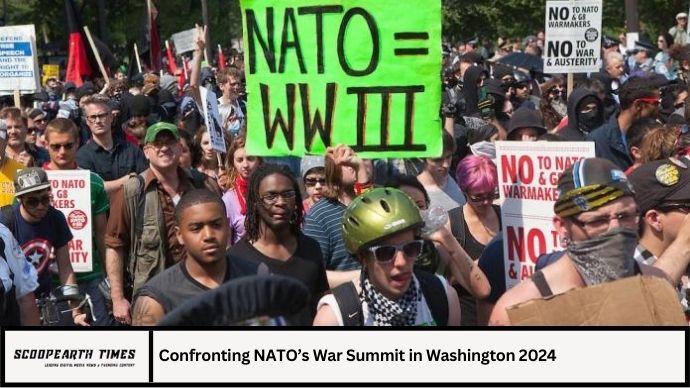
The NATO War Summit in Washington marks a critical juncture in global geopolitics, where leaders convene to address pressing security challenges and shape the alliance’s future trajectory. As tensions rise and strategic interests evolve, understanding the implications of this summit is crucial for policymakers, analysts, and global citizens alike.
Historical Context and Significance
Founded in 1949, the North Atlantic Treaty Organization (NATO) has served as a cornerstone of Western security and defense cooperation. Originally formed as a collective defense alliance against Soviet aggression during the Cold War, NATO has adapted to address new threats and geopolitical realities in the post-Cold War era.
The 2023 NATO War Summit in Washington comes at a time of heightened global uncertainty, with ongoing conflicts, terrorism, cyber threats, and the resurgence of great power competition shaping the strategic environment. Against this backdrop, NATO members gather to reaffirm commitments, discuss shared challenges, and chart a course for collective defense and security cooperation.
Key Themes and Agendas
Central to the NATO War Summit agenda are discussions on military readiness, strategic deterrence, and alliance cohesion. Leaders will address the need to adapt NATO’s defense posture to counter emerging threats, including hybrid warfare tactics and cyber attacks. Moreover, discussions on burden-sharing and defense spending commitments are expected to feature prominently, reflecting ongoing efforts to strengthen NATO’s collective capabilities.
Another key theme is NATO’s role in managing regional crises and conflicts, particularly in Eastern Europe, the Middle East, and North Africa. The summit provides an opportunity for NATO leaders to coordinate responses to ongoing conflicts, such as the crisis in Ukraine, and to reaffirm support for partners and allies facing security challenges.
Challenges and Controversies
The NATO War Summit is not without its challenges and controversies. Debate over defense spending obligations among member states continues to be a contentious issue, with calls for fair burden-sharing and increased investment in defense capabilities. Moreover, divergent views on NATO’s global role and its relationship with non-member states, particularly Russia and China, underscore the complexities of alliance management in a multipolar world.
Additionally, concerns over NATO’s enlargement and its implications for regional stability, particularly in Eastern Europe and the Balkans, add another layer of complexity to summit deliberations. Balancing deterrence with dialogue and de-escalation efforts remains a delicate diplomatic challenge for NATO leaders.
Implications for Global Security
The outcomes of the NATO War Summit are poised to have far-reaching implications for global security and defense cooperation. Enhanced military readiness and strategic deterrence measures will contribute to NATO’s ability to respond effectively to a range of security threats, thereby bolstering stability and predictability in international relations.
Moreover, reaffirming NATO’s commitment to collective defense and alliance cohesion sends a strong signal of unity and resolve amidst evolving security challenges. By strengthening partnerships with global allies and fostering dialogue with non-member states, NATO can play a pivotal role in promoting peace, stability, and democratic values on a global scale.
Conclusion
The NATO War Summit in Washington represents a critical opportunity for NATO members to reaffirm their commitment to collective defense and security cooperation in an increasingly complex geopolitical environment. By addressing key challenges, enhancing military readiness, and strengthening alliances, NATO can adapt to emerging threats and uphold its role as a cornerstone of international security.
As global security dynamics evolve, the outcomes of the NATO War Summit will shape the strategic landscape for years to come. By promoting dialogue, cooperation, and collective action, NATO can mitigate risks, build resilience, and safeguard peace and prosperity for its member states and partners worldwide.
FAQ
What is the NATO War Summit?
The NATO War Summit is a gathering of NATO member states’ leaders to discuss and coordinate defense and security policies, address emerging threats, and reaffirm collective defense commitments.
What are the key issues at the NATO War Summit?
Key issues include military readiness, strategic deterrence, defense spending, burden-sharing among member states, NATO’s role in regional crises, and its relationship with non-member states like Russia and China.
Why is the NATO War Summit important?
The summit is crucial for adapting NATO’s defense posture to current threats, strengthening alliance cohesion, and demonstrating unity in the face of global security challenges.
What are the controversies surrounding the NATO War Summit?
Controversies include debates over defense spending, NATO enlargement, relations with non-member states, and balancing deterrence with dialogue and de-escalation efforts.
What are the implications of the NATO War Summit for global security?
The summit’s outcomes will impact global security by enhancing NATO’s capabilities to respond to threats, fostering stability through collective defense, and promoting international cooperation in defense and security matters.