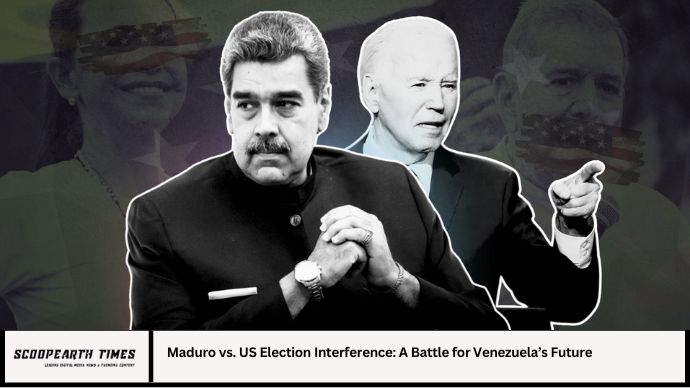
The political landscape in Venezuela has been marked by intense struggles, both internally and externally. One of the most contentious aspects of this struggle involves the accusations and claims of U.S. election interference, which have become a focal point in the ongoing conflict between Venezuelan President Nicolás Maduro and the United States. This article explores the multifaceted dimensions of this conflict, examining the implications of alleged U.S. interference, the responses from the Maduro government, and the broader impact on Venezuela’s future.
Background: The Venezuelan Political Crisis
Venezuela has faced a severe political and economic crisis in recent years. The country’s economic collapse, hyperinflation, and deteriorating living conditions have been accompanied by political turmoil and allegations of corruption and mismanagement.
The Rise of Nicolás Maduro:
Election and Presidency: Nicolás Maduro assumed the presidency in 2013 following the death of Hugo Chávez. His presidency has been marked by allegations of electoral fraud and authoritarianism.
Political Opposition: The opposition, led by figures such as Juan Guaidó, has challenged Maduro’s legitimacy, leading to a prolonged political standoff.
Economic Collapse:
Hyperinflation: Venezuela has experienced one of the highest inflation rates globally, leading to severe economic instability.
Humanitarian Crisis: The economic crisis has resulted in widespread shortages of basic goods, healthcare, and essential services.
International Sanctions and Relations:
Sanctions: The U.S. and other Western nations have imposed sanctions on Venezuela, targeting the government’s finances and key officials.
Diplomatic Isolation: Venezuela has faced increasing diplomatic isolation, with many countries recognizing Guaidó as the interim president.
Allegations of U.S. Election Interference
The Maduro government has consistently accused the United States of interfering in Venezuela’s internal affairs, particularly in the context of elections and political processes.
Historical Context of U.S. Involvement:
Past Interventions: U.S. involvement in Latin American politics, including support for anti-communist regimes and interventions, has a long history. The U.S. has been accused of meddling in various countries’ political processes.
Recent Accusations: Maduro and his government have accused the U.S. of attempting to influence Venezuelan elections and support opposition movements.
Specific Claims of Interference:
Funding Opposition: Maduro has alleged that the U.S. funds opposition groups and political campaigns aimed at destabilizing his government.
Diplomatic Pressure: The U.S. has been accused of using diplomatic channels to undermine Maduro’s legitimacy and support Guaidó.
Cyber Operations: There are claims that the U.S. has engaged in cyber operations designed to influence public opinion and disrupt Venezuelan politics.
Evidence and Counterclaims:
Documentation and Reports: Various reports and statements from the U.S. government and independent observers have addressed claims of interference, but evidence remains contested.
Government Denials: The U.S. government denies any direct interference in Venezuelan elections, framing its actions as support for democratic processes and human rights.
Maduro’s Response to U.S. Interference
In response to allegations of U.S. interference, the Maduro government has taken several measures to counteract what it views as external threats to its sovereignty.
Strengthening Nationalism:
Anti-Imperialist Rhetoric: Maduro has employed anti-imperialist rhetoric to rally domestic support and frame U.S. actions as part of a broader imperialist agenda.
National Unity Campaigns: Efforts to promote national unity and resist foreign influence have been central to Maduro’s strategy.
Political and Legal Measures:
Crackdown on Opposition: The government has targeted opposition leaders and activists, accusing them of being part of foreign conspiracies.
Election Reforms: Maduro has implemented changes to electoral processes, which he claims are aimed at improving transparency, although critics argue they consolidate his power.
International Alliances:
Seeking Support: Venezuela has sought support from allies such as Russia, China, and Iran, which have opposed U.S. sanctions and interventionist policies.
Diplomatic Efforts: The Maduro government has engaged in diplomatic efforts to challenge U.S. actions and gain international legitimacy.
The Broader Impact on Venezuela’s Future
The ongoing conflict between Maduro and the U.S. over election interference has significant implications for Venezuela’s future, affecting its political stability, economic prospects, and international relations.
Political Stability:
Internal Divisions: The political standoff exacerbates internal divisions and hinders efforts to address the country’s economic and humanitarian crises.
Potential for Conflict: The tensions between the government and opposition, coupled with external pressures, create a volatile environment with potential for further conflict.
Economic Consequences:
Sanctions and Isolation: U.S. sanctions and diplomatic isolation contribute to Venezuela’s economic difficulties, impacting trade, investment, and access to resources.
Humanitarian Impact: The economic crisis has severe humanitarian consequences, including widespread poverty, malnutrition, and migration.
International Relations:
Global Alliances: Venezuela’s alliances with non-Western powers influence its international relations and shape its responses to external pressures.
Diplomatic Recognition: The struggle for international recognition and legitimacy continues to impact Venezuela’s global standing and ability to engage in international forums.
Comparative Analysis: Other Instances of U.S. Election Interference
To contextualize the situation in Venezuela, it is useful to compare it with other instances of U.S. involvement in foreign elections and political processes.
Historical Examples:
Latin America: The U.S. has a history of involvement in Latin American politics, including support for anti-communist regimes and intervention in elections.
Middle East and Asia: Similar patterns of interference have been observed in other regions, with the U.S. supporting certain political factions and undermining others.
Contemporary Cases:
Russia and China: The U.S. has accused Russia and China of interfering in its own elections, highlighting the complexities of election interference in a global context.
Comparative Strategies: Comparing U.S. actions in Venezuela with those in other countries reveals patterns and variations in how interference is carried out and perceived.
The Role of Media and Public Perception
Media coverage and public perception play crucial roles in shaping the narrative around U.S. interference and its impact on Venezuela.
Media Coverage:
Narratives and Bias: Media coverage often reflects various biases and narratives, influencing public opinion and the framing of the conflict.
Information Sources: Access to reliable and unbiased information is essential for understanding the complex dynamics of the situation.
Public Opinion:
Domestic Perspectives: Venezuelan public opinion is divided, with some supporting the Maduro government and others backing the opposition.
International Views: International public opinion varies, with differing perspectives on U.S. actions and Venezuelan politics.
Theoretical Perspectives on Election Interference
Understanding the theoretical frameworks surrounding election interference provides insights into the motivations and consequences of such actions.
Realism and Power Politics:
Power Dynamics: Realist theories highlight the role of power dynamics and strategic interests in international relations, including election interference.
Strategic Goals: U.S. actions in Venezuela can be analyzed through the lens of strategic goals and geopolitical considerations.
Constructivism and Norms:
Norms and Legitimacy: Constructivist theories focus on the role of norms, values, and legitimacy in shaping international behavior and responses.
Ideological Conflicts: The ideological conflict between democratic norms and authoritarian practices influences the perception of interference.
Frequently Asked Questions (FAQ)
1. What are the main accusations against the U.S. regarding Venezuela’s elections?
The Maduro government accuses the U.S. of funding opposition groups, exerting diplomatic pressure, and engaging in cyber operations to influence Venezuelan elections and destabilize the government.
2. How has Maduro responded to these accusations of interference?
Maduro has employed anti-imperialist rhetoric, implemented political and legal measures against the opposition, and sought support from international allies to counteract perceived U.S. interference.
3. What impact do U.S. sanctions have on Venezuela’s economy and humanitarian situation?
U.S. sanctions contribute to Venezuela’s economic collapse by targeting key sectors and officials, exacerbating the humanitarian crisis with widespread poverty, malnutrition, and migration.
4. How does the situation in Venezuela compare to other instances of U.S. election interference?
The situation in Venezuela reflects broader patterns of U.S. involvement in foreign elections, with similarities to historical and contemporary cases of interference in Latin America and other regions.
5. What are the theoretical perspectives on election interference and its implications?
Theoretical perspectives, such as realism and constructivism, provide insights into the motivations and consequences of election interference, including strategic goals, power dynamics, and normative conflicts.
Conclusion
The conflict between Nicolás Maduro and the United States over allegations of election interference is a complex and multifaceted issue with profound implications for Venezuela’s future. The accusations and responses reflect broader patterns of geopolitical struggle, with significant impacts on Venezuela’s political stability, economic prospects, and international relations.
Understanding the nuances of this conflict requires a comprehensive analysis of the historical context, specific claims, and broader theoretical frameworks. As Venezuela continues to grapple with internal and external pressures, the resolution of this conflict will be crucial for determining the country’s trajectory and the prospects for a stable and democratic future.